Living the Joys of a National Park
Exploring a national park
It’s like going to the light from the dark
Promoting wellness, decreasing stress
Wildlife and nature are sure to impress
These blessings will make their mark
For your living the joys of a national park
© Forrest W. Heaton December 2025
Politics. (We began writing this post 26Dec25) For the eight years we’ve been writing this blog, we’ve promised our readers we will not write about politics, and we do not intend to break that promise now. The reasons we have avoided politics include: 1. Many of our readers may be of a different political persuasion than us, and 2. Many consider the news bad, all consuming and everywhere. You don’t need to read more of it here.
Selling Public Lands. During these eight years, we have often written about national parks and, in that same eight year period an American administration has been voted in—an administration supported by members of Congress of the same party which is considering selling off our public lands and treating the worldwide issue of climate change as “a Democratic (capital D) hoax” thus contributing to the denigration of many of our public lands such as our national parks. What has changed is we have an administration which has made national parks a political issue, not us changing our minds. By remaining silent we could be considered complicit on this topic. We feel we should not remain silent.
Park Advocates. On 19 December, the NPCA (National Parks Conservation Association), the primary non-profit dedicated to protecting our national parks, advised readers that: “Senator Mike Lee” (a Republican from Utah) “introduced an amendment (to the Interior Appropriations bill) that would have removed protections against selling America’s national parks – and would have sent a signal for the White House to move ahead with extreme cuts. But park advocates mobilized. You called on your senators to reject this dangerous amendment. You flooded the Senate’s phone lines. Last night (18 Dec), Senator Lee reversed his attempt to remove these National Park protections from the Interior Appropriations bill.”
“But the deal isn’t done. The Senate went on recess before voting on the bill. We need to stay vigilant. Together, we put pressure on our senators. Together, we spoke out online. Together we’re rolling back this threat. This is what happens when park advocates raise our voices. Take a moment to share the good news on social media so that park advocates will know: When we stand together, we can protect our parks!”
Message to the Administration and Congress. These public lands are just that, public. These lands belong to the people, not the administration or the Congress. One can not sell what one does not own! These lands are for the public--domestic and international for recreation, protection and expansion. You in the administration and Congress were elected among other things to be good stewards of these lands—good stewards of the wildlife, natural beauty and maintenance.
Park Advocates: Flood the Phone Lines. If you are in the United States, please call your Senator, and request he or she not support this amendment and while you’re at it, please ask the House Representatives to provide the funds required to maintain the parks.
In previous posts, we’ve advised you of NPCA’s contact information and do so again now. They can always use fresh faces and fresh money! They are located in Washington DC. Their phone number is 1 (800) 628-7275.
Climate Change. As the NPCA advises: “Our parks face unprecedented threats—staffing (as the administration fires long-time park rangers), fossel fuel and mining development, proposed budget cuts.” To this list of threats we add: climate change. The NPCA further advises: “There is a disproportionate magnitude of climate change in our U.S. national parks.” This includes: “Loss of Snow and Ice: In some parks the melting of glaciers and thawing of permafrost are visible. Along the coast many parks grapple with sea-level rise; Changing Landscapes: Climate change is drastically altering U.S. national parks through rising temperatures, melting glaciers, intense wildfires, sea-level rise, and shifts in ecosystems leading to habitat loss, species endangerment, infrastructure damage, altered landscapes (like disappearing glaciers), and challenges to recreation, affecting everything from water resources to visitor safety and the very nature of these protected areas. Parks, specifically in the West and Alaska, are warming faster than the national average, causing profound, often irreversible, changes. Climate Impacts: Climate change is the greatest threat the national parks have ever faced. By the year 2100, annual average temperatures across 62 major national parks could warm between 5.5 and 11 degrees F compared to the 1991-2020 baseline.”
Thank You. Thank you for, as Rachael Maddow says: “softening your hearts, and hardening your resolve” and your understanding of our points of view as expressed in this post.
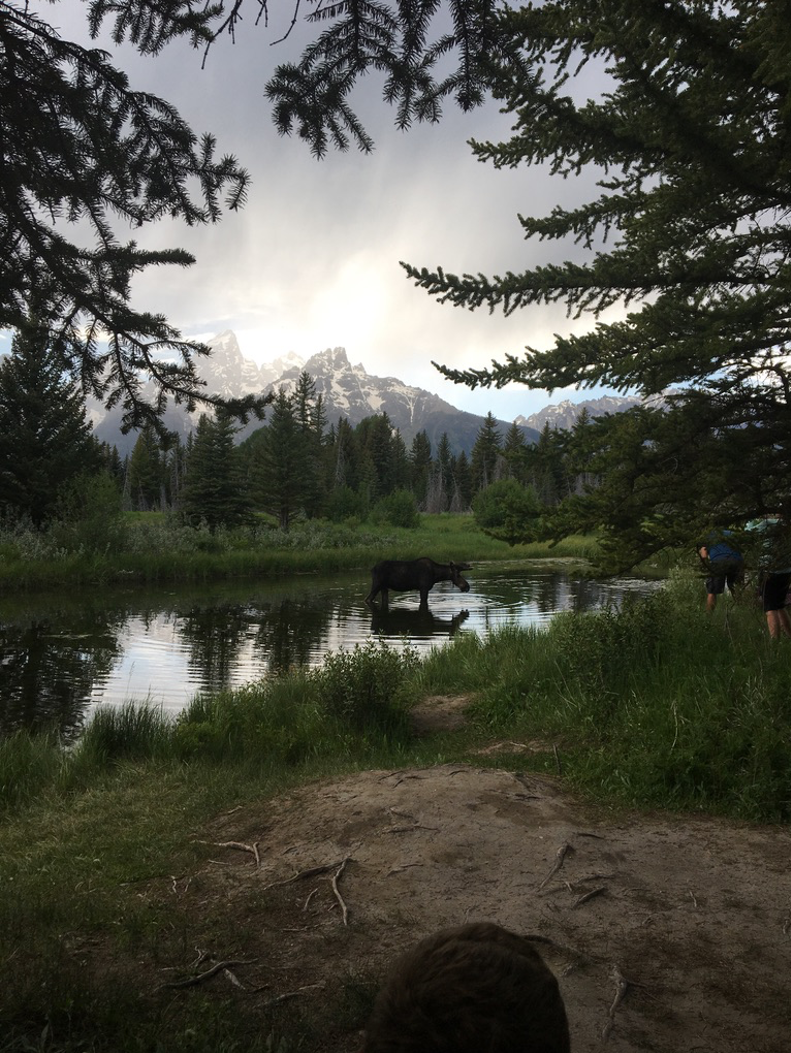
Where Else? The image we’ve chosen to include in this post is a photo Forrest took of a moose drinking from a stream in Grand Teton National Park. We had taken Mary’s family to Grand Teton and Yellowstone National Parks in June 2022 to celebrate Mary’s 60th birthday. Where else could you digitally capture a mirror image of a moose drinking from a stream with the snow capped Tetons rising in the background and the nearby foliage framing the photo so well?